
Why Buying a Turn-Key Resort Could Be the Smartest Investment in Lombok

For investors researching property in Lombok, the journey usually begins the same way.
You search for land for sale in Selong Belanak.You browse listings for villas for sale in Lombok.
You start looking at the possibility of acquiring a resort for sale, or imagine building a boutique resort, surf lodge, or small hotel just minutes from the beach.
On paper, the idea of buying land and building from scratch can seem appealing. Land prices in Lombok still appear relatively affordable compared with nearby Bali, and the region is experiencing a surge in tourism interest.
But many investors who begin exploring development quickly discover something important:
Building a hospitality property in Indonesia can be far more complex, expensive, and time-consuming than expected.
In many cases, buying an existing operational resort can actually be cheaper, faster, and significantly less risky than building your own. Not to mention more profitable.
In this guide, we’ll explore:
The real costs of building a resort in Lombok
The hidden challenges most investors don’t anticipate
Why turn-key hospitality properties often outperform new builds
Why the area around Selong Belanak is attracting serious attention from international buyers
And at the end, we’ll reveal details about a rare hospitality investment opportunity currently available near Selong Belanak.
Lombok: Indonesia’s New Major Tourism Destination

Over the past decade, Lombok has quietly evolved from a relatively undiscovered island into one of Southeast Asia’s most exciting emerging tourism markets.
While Bali continues to dominate Indonesia’s tourism industry, Lombok offers something increasingly rare:
Space, authenticity, and early-stage investment potential.
International investors have begun to recognise that Lombok today resembles Bali twenty years ago.
There are several reasons why.
Infrastructure Investment
The development of Lombok International Airport dramatically improved accessibility to the island.
Flights now connect Lombok to:
Jakarta
Singapore
Kuala Lumpur
Bali
Travel time from the airport to the south coast is roughly 35–40 minutes, making areas like Selong Belanak extremely accessible for visitors.
The Rise of South Lombok
While Senggigi and the Gili Islands have historically attracted tourists, South Lombok has become the new frontier for tourism development.
Beaches like:
Selong Belanak
Mawun
Tanjung Aan
Mawi
have become famous among surfers and travellers seeking pristine coastlines without mass tourism.
Selong Belanak in particular has become one of Lombok’s most desirable destinations due to:
Its wide crescent-shaped beach
Gentle beginner surf
Stunning sunsets
Growing selection of boutique resorts and restaurants
For property investors, this combination creates an attractive equation:
Growing tourism demand + relatively limited accommodation supply.
The Dream: Building Your Own Resort in Lombok

Many investors first imagine building their own resort.
The idea is appealing:
Buy land near the beach
Design a boutique resort
Build a few villas or bungalows
Open and start welcoming guests
This approach offers creative freedom.
But the reality of building in Indonesia can introduce challenges that dramatically affect budgets and timelines.
The Real Cost of Developing a Resort

To understand why many investors ultimately choose to buy existing hospitality businesses, it helps to break down the true cost of developing a resort from scratch.
Buying Land in Lombok
The first step is purchasing land.
Foreign investors often acquire property through long-term leases or structured ownership rights such as Hak Guna Bangunan.
While land prices in Lombok remain lower than in Bali, prime plots near Selong Belanak beach, for example, have been rising steadily.
Buying land is only the beginning.
Architectural Design and Planning: What Does an Architect Cost in Lombok?
Before construction begins, developers typically need a full design and planning phase, which usually includes:
Architectural design
Structural engineering
Site planning
Environmental considerations
Drainage and utilities design
Professional design alone can represent a significant early investment.
Architect fees in Indonesia are typically structured either as a percentage of construction cost (usually between 3–8%), or as a per-square-meter design fee, which can range from $15–$60 per m² depending on the studio and project complexity.
At the premium end of the market, international architectural firms working on luxury villas in Lombok and Bali can charge well over $100,000 USD for a full villa design package.
At the other extreme, some budget projects begin with very basic concept drawings or freelance plans created online for a few hundred dollars.
But regardless of where a project starts, most serious developments eventually require professional architectural and engineering work to obtain permits, coordinate contractors, and ensure the building is structurally sound and suitable for hospitality use.
For investors planning a boutique resort or villa complex, design and planning can easily be among the first major costs, long before construction even begins.
Construction Costs: How Much Does it Cost to Build a Villa in Lombok?
Construction costs in Lombok vary widely depending on build quality, materials, contractor experience, and site conditions.
As a very rough guide, typical villa construction costs in Lombok currently range between $500 and $1,200 USD per square meter.
At the lower end of the spectrum, simple residential villas using local materials and basic finishes may be built for closer to $500–$700 per m².
However, boutique hospitality properties, luxury villas, and architect-designed developments typically fall within the $800–$1,200 per m² range.
For ultra-high-end construction using imported materials, custom design, and premium finishing, it’s not unusual to see quotes exceeding $1,500 per m².
Boutique hospitality properties often cost more than private homes because they must meet higher standards for durability, guest comfort, and operational reliability.
Factors that influence construction budgets include:
Imported materials and speciality finishes
Skilled labor availability
Logistics and transport to remote sites
Weather conditions during construction
Site preparation and drainage requirements
Even well-managed projects frequently exceed initial estimates.
And it’s worth noting that cheap construction doesn’t always mean low cost in the long run.
Poor foundations, uneven slabs, incorrect cement ratios, and rushed structural work may reduce initial costs but often lead to expensive repairs later. In tropical environments like Lombok, getting the structural work right the first time is almost always far cheaper than trying to fix problems once the building is finished.
Construction Delays: The Reality of Island Building

One of the most common challenges developers face when building in Lombok is timeline drift.
Even well-planned projects frequently take longer than expected due to factors such as:
Rainy season weather interruptions
Supply chain delays for materials
Contractor scheduling conflicts
Skilled labor availability
Permit processing timelines
In practice, a development scheduled for 12 months can easily extend to 18 or even 24 months.
For larger projects, it’s not unusual for timelines to stretch even further.
During this time:
Capital is tied up in construction
No income is generated from the property
The business cannot begin operating
For investors who are new to development, there are often additional challenges.
Building a hospitality property is a complex undertaking, and many first-time developers underestimate the scale of the process. Without prior construction experience, it is easy to make costly mistakes during design, contractor selection, or project execution.
Most owners, therefore, rely heavily on a trusted project manager or construction supervisor to oversee the build. Finding someone with the right experience, reliability, and attention to detail can be one of the most important factors in whether a project stays on schedule and on budget.
For many investors, these delays and uncertainties are among the highest hidden costs of building a resort from scratch.
Permits, Licensing, and Compliance
Operating a hotel, villa rental, or resort in Indonesia requires the correct permits and legal structure.
Depending on the scale of the resort, this may include:
Building permits
Tourism licenses
Environmental approvals
Business registrations
Local zoning compliance
Foreign investors frequently establish a PMA company in order to legally operate hospitality businesses in Indonesia.
This process can involve:
Legal consultation
Corporate structuring
Government approvals
Ongoing compliance obligations
All of these steps require time, legal expertise, and additional cost. For a small villa or boutique resort development in Lombok, the permitting process typically takes 3 to 9 months, assuming the land zoning and documentation are already in order.
Furnishing a Resort: The Costs Few Investors Expect

Once construction is finished, many developers discover another major expense:
Furnishing and equipping the resort.
A boutique hospitality property requires far more than beds and chairs.
Typical purchases include:
Guest room furniture
Mattresses and bedding
Air conditioning systems
Pool pumps and filtration
Laundry equipment
Kitchen appliances
Lighting and electrical fixtures
Back up generator
Outdoor furniture
Landscaping
Even items like towels, sheets, tableware, and decor add up quickly.
For a small resort, furnishing alone can represent a very large investment.
Building Reputation Takes Years
Opening a new resort is only the beginning.
Hospitality businesses rely heavily on online visibility and reputation.
Most bookings today come through platforms such as:
Airbnb
Tripadvisor
New resorts must slowly accumulate:
Guest reviews
Search ranking
Platform visibility
Repeat customers
This process often takes years to fully establish.
Until then, occupancy rates may fluctuate significantly.
The Advantage of Buying a Turn-Key Resort
Because of these factors, many experienced investors eventually shift their strategy.
Rather than building from scratch, they choose to buy an existing hospitality business.
This approach offers several advantages.
Immediate Revenue
The most obvious benefit is immediate income.
A functioning resort already has:
Active listings on booking platforms
Existing reservations
Guest reviews
Operating staff
Established processes
Instead of waiting years to begin earning revenue, investors can step directly into an operational business.
Proven Business Model
When buying a turn-key resort, you can evaluate real performance metrics.
These may include:
Occupancy rates
Seasonal demand patterns
Revenue history
Guest feedback
Operational expenses
This data provides far more certainty than projections for a future development.
Avoiding Construction Risk
Construction is one of the largest sources of uncertainty in any development project.
Buying an existing resort removes many of these risks entirely.
You acquire:
Completed buildings
Operational utilities
Furnished rooms
Landscaped grounds
All of the difficult stages of development have already been completed.
Established Brand and Reputation
A well-run resort may already have:
Strong online ratings
Repeat customers
Word-of-mouth referrals
Social media presence
These intangible assets can represent years of marketing effort and customer trust.
Living the Lifestyle
Many boutique resort owners in Lombok choose to live on the property.
This arrangement offers several advantages:
No external rent or housing costs
Direct oversight of the business
Strong guest relationships
Reduced management expenses
For investors seeking a lifestyle business in paradise, this model can be particularly appealing.
The Smart Way to Enter the Lombok Market
For investors considering Lombok, the decision between building a resort and acquiring an existing hospitality property can significantly influence both risk and return.
Developing a resort from scratch offers creative freedom, but it often involves long timelines, construction risk, regulatory complexity, and a lengthy period before the property begins generating income.
Acquiring a turn-key hospitality property, on the other hand, allows investors to enter the Lombok market with many of the most difficult stages already completed.
A functioning resort typically already has:
Immediate revenue
Proven operations
Established guest reviews and online visibility
Trained staff and operational systems
For many buyers, this approach provides a faster, more predictable path into Lombok’s growing tourism industry while still leaving room for future expansion or repositioning of the property.
A Rare Hospitality Investment Opportunity

For investors who recognise the advantages of acquiring an operational hospitality property rather than building from scratch, opportunities do occasionally appear in Lombok - although they rarely remain available for long.
At South Lombok Land Sales, we are currently representing one such opportunity.
Because the owner has requested confidentiality, the property is being marketed as a blind listing and full details are available only under a non-disclosure agreement (NDA). However, we can share a few general characteristics.
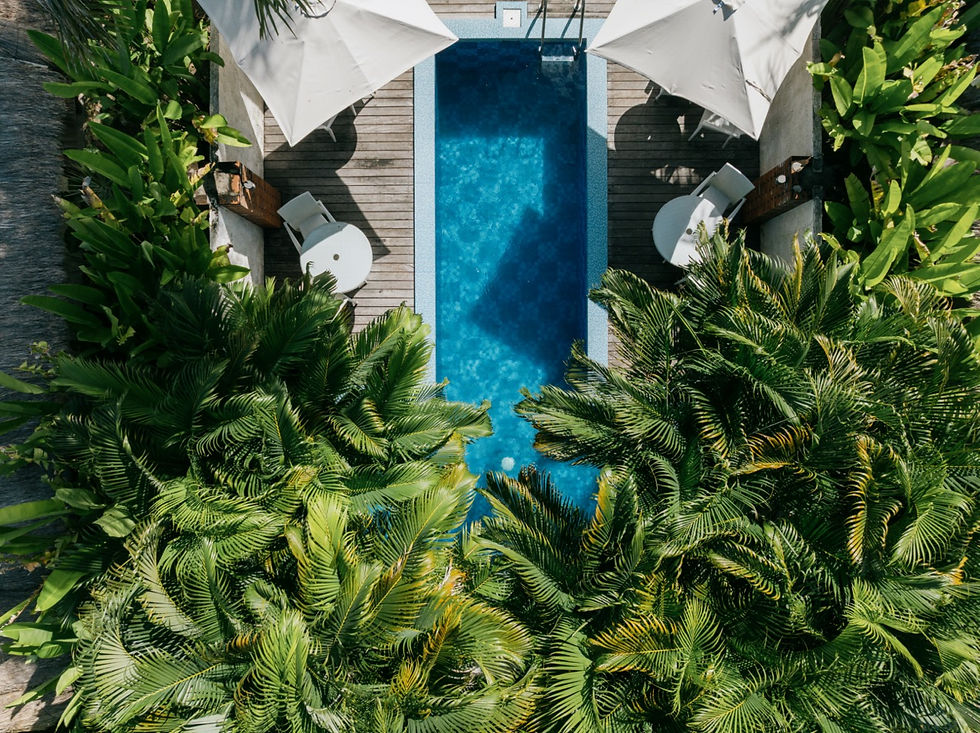
The property is a boutique bungalow resort located within walking distance of Selong Belanak Beach. The buildings were constructed and continue to be maintained by the contractor responsible for several well-regarded commercial developments across South Lombok, giving the property a distinctive architectural style and level of construction quality that stands out among smaller boutique resorts in the area.
Development Potential
What makes this property particularly interesting is that it combines an operational hospitality business with additional land that allows for further development.
The site has already been master-planned for potential expansion.
Possible additions could include:
A small boutique hotel building
Several additional villas
Expanded wellness or leisure facilities
A larger pool or guest recreation area
This gives the next owner the flexibility to acquire a functioning hospitality business, generate income from day one, and expand the property gradually over time if desired.
Location: Minutes From Selong Belanak Beach

The resort sits approximately four minutes’ walk from Selong Belanak Beach. Walkable properties this close to the beach are increasingly difficult to find, particularly those with sufficient land for future expansion.
For hospitality businesses, proximity to the beach remains one of the most important factors influencing guest demand and booking performance.
Why Opportunities Like This Are Rare
Most properties near Selong Belanak fall into one of two categories:
Land plots that require full development
Resorts already operated by long-term owners
Properties that combine an existing hospitality business, additional development land, and a prime location near the beach are therefore relatively uncommon in the region.
Learn More About This Opportunity
Because this property is being marketed as a confidential listing, full information is available only after signing a non-disclosure agreement (NDA).
Once the NDA is completed, interested buyers receive access to the confidential investment memorandum, which includes:
The full property profile
Financial overview
Detailed photographs
Location information
Investors interested in learning more can visit the listing here
Or request the confidential information package through our contact form


업무와 개인 일정이 겹쳐 여유 시간이 부족할 때는 이동에 드는 시간을 줄이는 것이 효율적인 방법입니다. 서비스는 원하는 공간에서 편안하게 이용할 수 있어 시간 활용에 도움이 됩니다. 퇴근 후 휴식이나 주말의 출장마사지 컨디션 관리처럼 일정에 맞춰 유연하게 활용할 수 있다는 점이 매력적입니다.